

In 2025, the carbon dioxide laser has been shining for 61 years. Meanwhile, since Coherent launched the first commercial product in 1966, this world-changing invention has reached its 60th year of commercialization. For this reason, we have compiled a biography of Kumar Patel, the inventor of the CO₂ laser. Traveling through more than 60 years of time, let's look back on Patel's scientific legend full of breakthroughs and innovations today.
In 1963, at Bell Labs, the young C. Kumar N. Patel stood in front of the equipment, surrounded by his colleagues who were all turning to solid-state laser research. At that time, the industry had already concluded that "gas lasers are destined to be just laboratory toys", with their power limit restricted to 50 milliwatts. However, this Indian scientist did not leave. He stared at the flickering gas in the discharge tube and thought backwards about a question that everyone else had given up on: "Why can't gas lasers produce high power?" This seemingly simple question ultimately leveraged the historical process of laser technology.
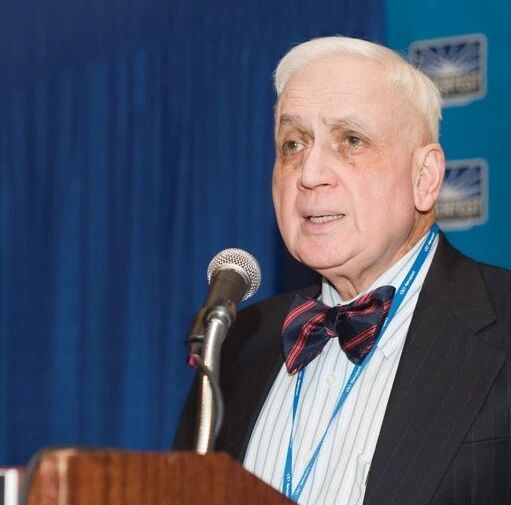
Kumar Patel
1. The Gears of Fate: From Diplomat to Physicist
Born in Pune, India in 1938, there was no place for lasers in Patel's original life plan. His initial dream was to become a diplomat, but when he obtained a degree in telecommunications engineering from the College of Engineering, Pune, India, he was under 23 years old and thus unable to take the diplomat exam immediately (in India, one must be at least 23 years old to take the exam). Faced with this age restriction, his father's suggestion - "This is not bad either; get a doctoral degree in three or four years" - sent him to the distant Stanford University.
In 1958, Patel entered Stanford University with the dream of becoming a diplomat, but he was unexpectedly inspired by microwave physics and ignited his academic passion. Having been accustomed to the slow pace in India, he was truly shocked by the rhythm of American education: "It took me 3 months to realize that this is a completely different lifestyle." Stanford's strict quarterly assessment system was different from India's old annual exam model, leaving him "no time to rest at all".
Becoming a student of Dean Watkins, who was authoritative in the field of vacuum tubes at that time, became a turning point in his academic career. This mentor was famous for his "uninvolved guidance" - the teacher and student met only three times in two years. The first time, Watkins asked him to choose his own research topic from a pile of materials. Patel boldly abandoned the vacuum tube field that his mentor specialized in and chose solid-state microwave physics, which even his mentor did not understand. Watkins then recommended someone who could guide him. The second time, after learning from the guide that Patel had made a breakthrough, the mentor took the initiative to call to confirm. The third time, when Patel wanted to include his mentor Dean Watkins' name in the list of paper authors, Watkins firmly refused: "When we do science, we must also have principles. Since I did not participate in the research, my name should not appear on the paper."
Watkins engraved two scientific maxims in Patel's mind: "Top scientists are not problem-solving machines, but discoverers of problems" and "Academic integrity is above everything else". This "sword of freedom" cut off academic dependence, shaped Patel's soul of independent exploration, and laid the groundwork for subverting the laser field in the future.
2. Bell Labs: The Boundary-Breaking Moment of Cross-Border Lasers
In 1961, Patel, holding a doctoral degree from Stanford, stood in the interview room of Bell Labs. When the interviewer P.K. Tien asked, "How much do you know about lasers?" he honestly replied, "Nothing at all". However, relying on his profound knowledge of maser technology, he keenly pointed out that the tunability of lasers might open up a new field of laser spectroscopy, thereby achieving higher spectral resolution than any other form.
In the end, after interviewing with IBM, Raytheon, and Bell Labs, Patel chose Bell Labs, which offered the lowest salary. The open and free experimental environment there was the research sanctuary he yearned for. Here, he spent a month exploring freely and finally locked in his research direction: expanding the transition spectrum of gas lasers. At that time, the laser world was almost dominated by helium-neon lasers, with only a few closely spaced transition spectral lines.
There were no academic barriers at Bell Labs, and equipment sharing was the norm. In the first two years, Patel worked side by side with spectroscopy doctors such as Bill Bennett, Walter Faust, and McFarlane. He consulted them on spectroscopy knowledge and eagerly learned about this new field.
"One of the most exciting things about Bell Labs is that it is everyone's laboratory. In the laboratory, people are selfless and willing to share information with colleagues anytime and anywhere. So if you want to learn something, people will sit down and tell you everything they know, or lend you any equipment they don't use."
While others in the laboratory mainly studied helium-neon lasers, Patel studied various types of gas lasers. In just two years, he successfully expanded the types of gases that generate lasers and the number of transitions by thousands of times, and created a xenon laser system with amazing gain. More importantly, by applying a magnetic field to the laser and using the Zeeman effect to split the transition spectral lines, he created the world's first proof-of-principle tunable laser. Although the tuning range was limited, it opened the door to high-resolution spectroscopy.
3. Subverting the Conclusion: The Difficult Birth of the CO₂ Laser
However, a turning point occurred in 1963, when the entire gas laser field was in a cold winter. Solid-state lasers emerged with their small size and high power, and the academic community generally believed that "gas lasers are only suitable for research and cannot be practicalized". Colleagues turned to solid-state research one after another, leaving Patel as a lonely adherent.
Faced with the assertion that "gas lasers are destined to be 'laboratory toys' and gases cannot produce high-power output", Patel thought backwards about the core proposition: Why can't gas lasers produce large amounts of power?
He realized that if he wanted to obtain a high-power gas laser, he needed to find a completely different system from the atomic system, in which all energy levels were closer to the ground state - that is, a molecular system. At first, in diatomic molecules, he found it difficult to form an effective population inversion between vibrational energy levels. Later, he turned to more stable triatomic molecules - considering stability and simplicity, he finally locked in carbon dioxide (CO₂) gas.
“A simple calculation showed that it should perform very well at a wavelength of 10.6 μm. In fact, it didn't take long; just observing for ten seconds was enough to confirm that this was what I was looking for, and the effect was extremely significant. The device worked successfully the first time I turned it on and off!” The experimental verification was surprisingly fast.
In addition, Patel also realized the uniqueness of diatomic molecules - their excited states have no dipole moment. When studying stable diatomic molecules (such as nitrogen and oxygen), it was found that such molecules are difficult to decompose in gas discharge. Through literature, he discovered that the first excited state of nitrogen has a lifetime of up to seconds, and the proportion of particles in the discharge can reach 30%. Patel boldly mixed nitrogen into the CO₂ system and used its efficient energy transfer characteristics to finally break through the 1 W power barrier.
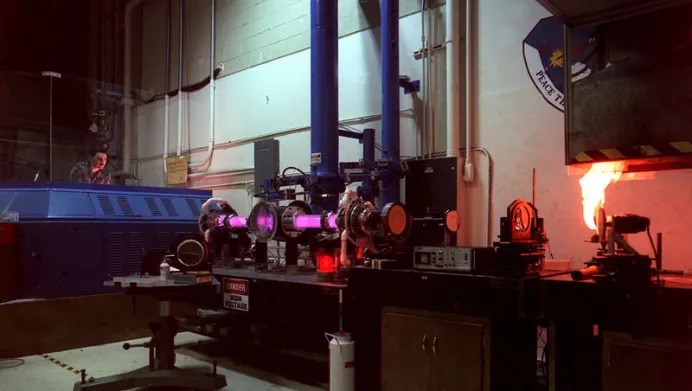
By optimizing various parameters, in 1964, Patel's team successfully created the first gas laser with a continuous output power of 100 W. When the Department of Defense called to invite him to give a report, Patel had already decided to turn to other directions. Because he knew very well that the future of this field belonged to engineering optimization, not basic innovation. "If the only criterion for success is 'how much more power can be increased' rather than 'disruptive innovation', then why compete in this field?"
4. Exploring New Frontiers: The First Practical Infrared Tunable Laser
Scientists should explore new territories, so with the high-power advantage accumulated from the CO₂ laser, Patel began to think about “what unprecedented and unique things can be done” - nonlinear optics became his new battlefield.
In order to understand the properties of materials in the 10.6 μm infrared band, he chose "tellurium" as the first research object. This material has the largest known molecular nonlinear coefficient, thus initiating the research on nonlinear optics in the infrared band.
His ultimate goal was to create a truly practical tunable laser. At that time, using a high-power laser with a fixed frequency and a certain nonlinear material to generate parametric gain to create a tunable laser was already a very clear method. However, while reducing the frequency, the frequency width would become too narrow. This was where Patel's interest lay.
To extend the parametric amplifier to the visible light region or the infrared region, nonlinear materials were a good choice. Patel spent nearly a year exploring the properties of nonlinear materials to find the most optimized one.
When his colleague Peter Wolf proposed the theory of "realizing tunable Raman scattering by using magnetic field to quantize the electronic energy levels (Landau levels) in semiconductors", Patel keenly realized its value. At the same time, Patel also discovered the nonlinear behavior of electrons in semiconductors - electrons in the semiconductor lattice (rather than in a free state) are slightly nonlinear. By precisely controlling the magnetic field strength, the Landau level spacing can be adjusted over a wide range, which is exactly the ideal tunable light source.
In early 1967, the experiment achieved an unexpected gain: in addition to the zero-order to second-order Landau level transitions predicted by Wolf, Patel and his team also observed stronger spin-flip Raman scattering. Although this phenomenon had a limited tuning range, it had a huge scattering cross-section.
At that time, in the visible light region, dye lasers had been discovered, and spectroscopic research had been carried out in the visible light region, but the infrared region was still a blank. Patel and his postdoctoral fellow Alan Shaw tried to convert spontaneous Raman scattering into stimulated Raman scattering and conducted continuous experiments, but never succeeded.
"Either we successfully achieve laser oscillation, or there is no response at all. Although we can stably observe the spontaneous Raman signal, we have never been able to break through the threshold of stimulated emission. During this period, to maintain research motivation and broaden our thinking, I also studied related topics such as gas nonlinear effects (such as the infrared transparency of silicon materials)."
Finally, after two years of arduous research, at the end of 1969, Patel's team achieved a key breakthrough in the experiment - successfully developing the world's first practical infrared tunable laser. They applied this laser to spectroscopy, and in the following years, he also applied it to the field of pollution detection.
In addition to environmental detection and automobile exhaust detection, Patel also thought about "where else can such an efficient detection system be used?" He soon realized that one important direction was to measure nitric oxide (NO) in the stratospheric atmosphere.
In the early 1970s, the scientific community debated fiercely whether supersonic transport (SST) would damage the ozone layer. Theoretical models showed that stratospheric nitric oxide (NO) was the key, but it had never been measured in the field. Patel's team sent the Raman laser system to an altitude of 100,000 feet and for the first time accurately measured the stratospheric NO concentration and its diurnal variation. The data clearly proved that NO consumes the ozone layer through catalytic action, and the impact of the supersonic fleet cannot be ignored. This research provided key scientific support for global ozone layer protection policies.
5. Conclusion: A Laser Legend Spanning Sixty Years
From microwave research in the Stanford laboratory to the laser revolution at Bell Labs, Patel has always practiced the two creeds taught by his mentor: "the taste for discovering problems" and "the courage to challenge the conventional". When the industry asserted that gas lasers had no future, he solved the potential of CO₂ molecules in a reverse way; when nonlinear optics was limited to the visible light band, he took the lead in exploring the infrared territory; when environmental crises needed data support, he moved the laboratory to the stratosphere.
In 2025, the carbon dioxide laser invented by Patel marks its 61st anniversary. This research, which was once regarded as an "expedient measure", has now become the cornerstone of industrial laser processing. From freckle removal in dermatology to a medical tool in surgery, infrared tunable laser spectroscopy has become a standard tool for atmospheric monitoring and new material research and development.
Patel's life began with the dream of becoming a diplomat, but it changed the trajectory of the world due to scientific accidents. His story confirms that true innovation is often born in the cracks of "impossibility" - when common sense becomes a cage, only eyes that dare to question can see the future. The 10.6 μm infrared laser ignited in 1964 has traveled through a 60-year time tunnel and still shines brightly in the starry sky of human civilization, illuminating an endless road of exploration.