

In mid-May, President Trump made his first visit to China in nine years, accompanied by a delegation of 17 senior executives from leading U.S. firms in technology, finance, aerospace, and agriculture — including NVIDIA CEO Jensen Huang, Apple CEO Tim Cook, and Boeing President and CEO Kelly Ortberg.
One name on that list stood out: Jim Anderson, CEO of Coherent Corp. He is not a household name like Elon Musk, and Coherent does not possess the trillion-dollar brand recognition of Apple or Tesla. It is a well-regarded name in the laser and photonics industry. So why was the leader of a laser company included in this delegation — and what makes Coherent so strategically important?
The answer lies in the global AI boom that is reshaping the technology and industrial landscape. Once the underlying logic is understood, Anderson's presence on that list makes complete sense.
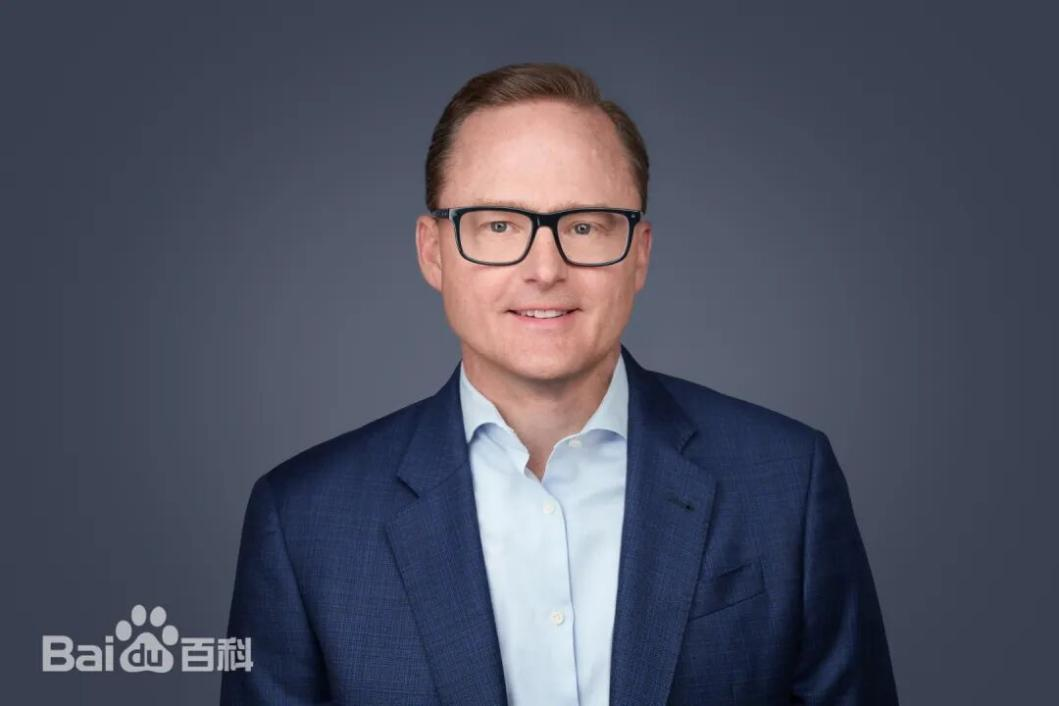
Jim Anderson(Source: Internet, infringement can be deleted)
The AI Surge: Compute Demand Has Entered an Explosive Phase
As large AI models and related technologies advance rapidly, AI applications are accelerating their penetration at scale worldwide, and global token consumption is growing exponentially — driving a surge in demand for compute. Google's monthly token call volume jumped from 9.7 trillion in April 2024 to 1,300 trillion by October 2025. ByteDance's Doubao saw daily token calls rise from 120 billion in March 2024 to 50 trillion in December 2025. These numbers highlight one clear trend: AI has entered the era of large-scale commercial deployment.
To meet the industry's current compute demands, cloud service providers worldwide have been steadily increasing capital expenditure. In Q4 2025, Microsoft, Amazon, Meta, and Google together spent $118.6 billion — up 64% year-over-year.
As data centers expand, cloud providers' demand for GPUs continues to grow. Many are now deploying ASIC chips at scale and building their own custom switching networks to reduce compute costs and improve operational efficiency. The rise in ASIC chip shipments has in turn driven rapid growth in demand for high-speed optical modules.
According to Lightcounting, the global data communications optical module market is projected to reach $22.8 billion in 2026 and $41.4 billion by 2030, representing a compound annual growth rate of approximately 20% from 2025 to 2030.
A Severe Shortage in InP Capacity
The core material for optical modules is indium phosphide (InP). Traditional InP-based solutions remain the market mainstream. However, global InP device capacity is severely constrained. In 2025, global device demand reached 2 million units, with a supply-demand gap of more than 50%. This shortage is expected to support device pricing and strengthen the competitive position of leading manufacturers. Yole forecasts global demand will surge to 2.6–3 million units in 2026, while effective capacity will reach only about 750,000 units — leaving a gap of over 70%.
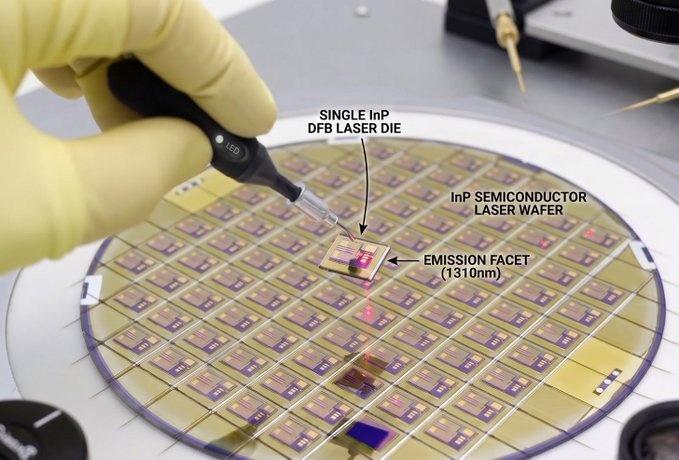
Indium phosphide(Source: Internet, infringement can be deleted)
Coherent's Strategic Position
This is where Coherent’s strategic importance becomes much clearer.
As a world-leading photonics enterprise, Coherent has built a comprehensive product portfolio covering industrial processing, semiconductors, scientific research, and optical communications. Its product lines include CO2 lasers, fiber lasers, ultrafast (picosecond/femtosecond) lasers, excimer lasers, semiconductor lasers, and solid-state lasers, as well as optical components, laser measurement systems, and high-speed optical communication modules. Over the years, Coherent has evolved from a traditional laser equipment manufacturer into an integrated photonics group covering lasers, optics, semiconductors, and optical communications.
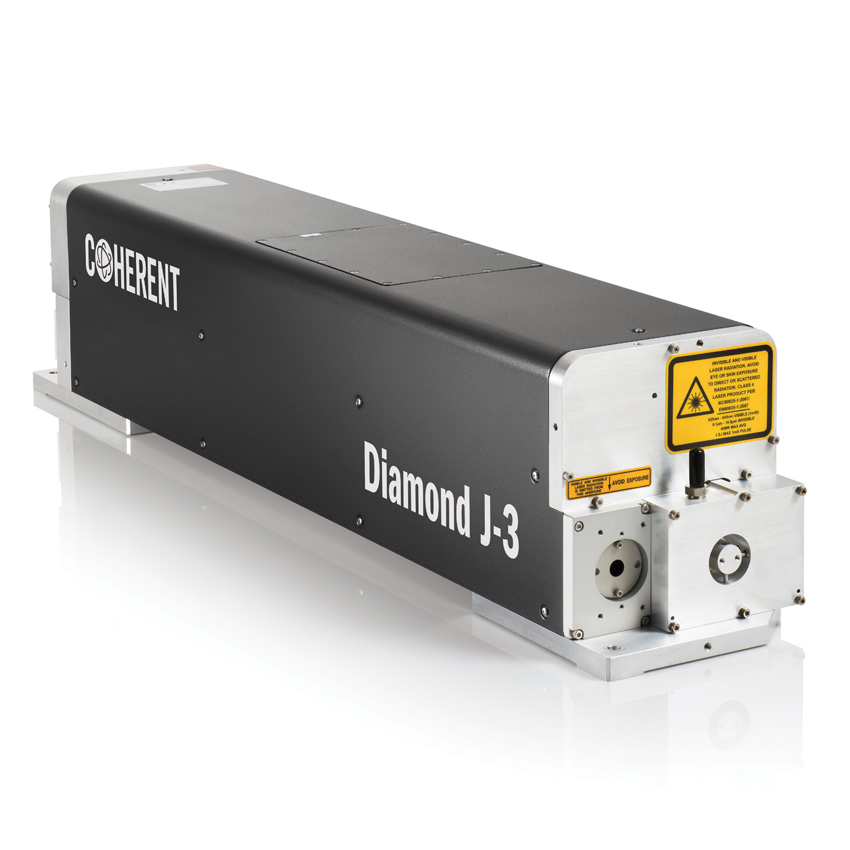
Coherent CO2 laser Diamond- J Series (Source: Internet, infringement can be deleted)
In August 2025, Coherent launched the industry's first six-inch indium phosphide wafer production line at its Sherman, Texas facility, driving improvements in the output of its EML and CW laser products. Initial production yields have already surpassed those of its mature three-inch line. Coherent had originally planned to double its InP capacity by end of 2026 — but that target now looks set to be achieved a full quarter ahead of schedule. Through parallel expansion at its Texas and Sweden facilities, Coherent expects its total InP capacity in 2027 to be more than four times current levels. This ramp will be further accelerated by NVIDIA's $2 billion strategic investment announced in March of this year.
It is also worth noting that Coherent has recently undergone a significant streamlining of its product lines — cutting SiC device modules, divesting its aerospace and defense business, and selling its industrial laser tool lines — concentrating all resources on a single vertical: the complete chain from upstream InP materials and laser chips through AI optical interconnect devices and high-speed optical modules. The reasoning behind this shift is fairly simple: InP is the only viable material platform for high-speed optical communications in the 1310/1550 nm band. Whether 1.6T optical modules ultimately use EML, silicon photonics PIC, or CW-plus-modulator architectures, all of these approaches still depend on InP substrates. By focusing on the material layer rather than any single technology path, Coherent has established itself as a key supplier in the transition from 800G to 1.6T and toward Co-Packaged Optics (CPO). NVIDIA's $2 billion strategic stake was essentially a move to secure long-term supply of the most constrained component in AI data center optical interconnects.
While the U.S. and Japan currently hold most of the world's indium phosphide production capacity, manufacturing InP wafers depends on refined indium as a critical raw material. Indium accounts for as much as 60% of InP costs. China holds a dominant position in the global refined indium supply chain. Industry data shows China's refined indium smelting capacity is approximately 1,100 tonnes per year, roughly 65% of the global total. From 2022 to 2025, China's primary indium output reached 1,996 tonnes, accounting for approximately 60% of world primary indium production.
Anderson's visit to China was most likely focused on exploring how to keep the raw material supply stable as AI infrastructure demand continues to grow. In a supply chain where critical resources and technical capabilities are distributed across different countries, that kind of cooperation has become a practical necessity.