

In modern manufacturing, CO₂ laser equipment has become an essential tool for various processing scenarios. Whether it's CO₂ laser cutting machines, CO₂ laser engraving machines, CO₂ laser marking machines, or CO₂ laser splitting machines, they are widely used in fields such as advertising production, craft processing, electronic manufacturing, medical devices, and automotive interiors, thanks to their efficient processing capabilities on non-metallic materials like wood, leather, acrylic, and glass.
For CO₂ laser equipment, its performance and service life depend not only on usage frequency, daily cleaning, and maintenance but also on the cooling system, which is equally crucial. Improper temperature control can not only lead to reduced processing accuracy but also cause costly damage to key components such as the CO₂ laser tube. Therefore, among numerous industrial water chiller products, selecting a reliable, dedicated laser water chiller for laser equipment is key to extending the laser's service life and ensuring stable operation.
This article will delve into the working mechanism of laser water chillers in CO₂ laser equipment, their role in protecting equipment performance, and how to scientifically select and maintain laser water chillers, helping users better understand this important auxiliary equipment.

Laser engraving works
I. Why Do CO₂ Lasers Generate Heat?
In CO₂ laser engraving machines and cutting machines, the RF CO2 laser is one of the core components. It mainly uses a mixed gas of CO₂, N₂, He, etc., as the working medium. Among them, CO₂ is the medium that generates laser radiation, while N₂ and He are auxiliary gases that assist in pumping CO₂ to the laser upper energy level. CO₂ lasers achieve light amplification through the transition between two vibrational energy levels of the electronic ground state of CO₂molecules, thereby producing laser oscillation.
However, only a small portion of the input electrical power is converted into the actual output optical power of the laser, with most of the remaining energy transformed into heat. This heat causes the internal temperature of the laser generator to rise rapidly. High temperatures reduce the excitation efficiency of the gas inside the laser, leading to attenuation of the laser output power. Research and practical applications have shown that when the laser temperature exceeds its optimal operating range (usually 23-25°C), the output power decreases significantly and the beam quality deteriorates noticeably. Meanwhile, insufficient heat dissipation can damage the internal structure and shorten the laser's service life.
Ⅱ. How Does a Chiller Work?
In CO₂ laser equipment, a chiller (industrial laser water chiller) is an important temperature control device that ensures the laser operates stably for extended periods. It dissipates the heat generated by the laser during operation through circulating coolant, thereby preventing overheating and extending the equipment's service life.
Below is a simple explanation of the chiller's working principle for cooling the laser, divided into 3 steps:
1.Coolant Circulation
The chiller's water pump delivers coolant (typically pure water or ethylene glycol aqueous solution) to the laser's cooling channels, allowing the coolant to directly contact the laser for heat exchange.
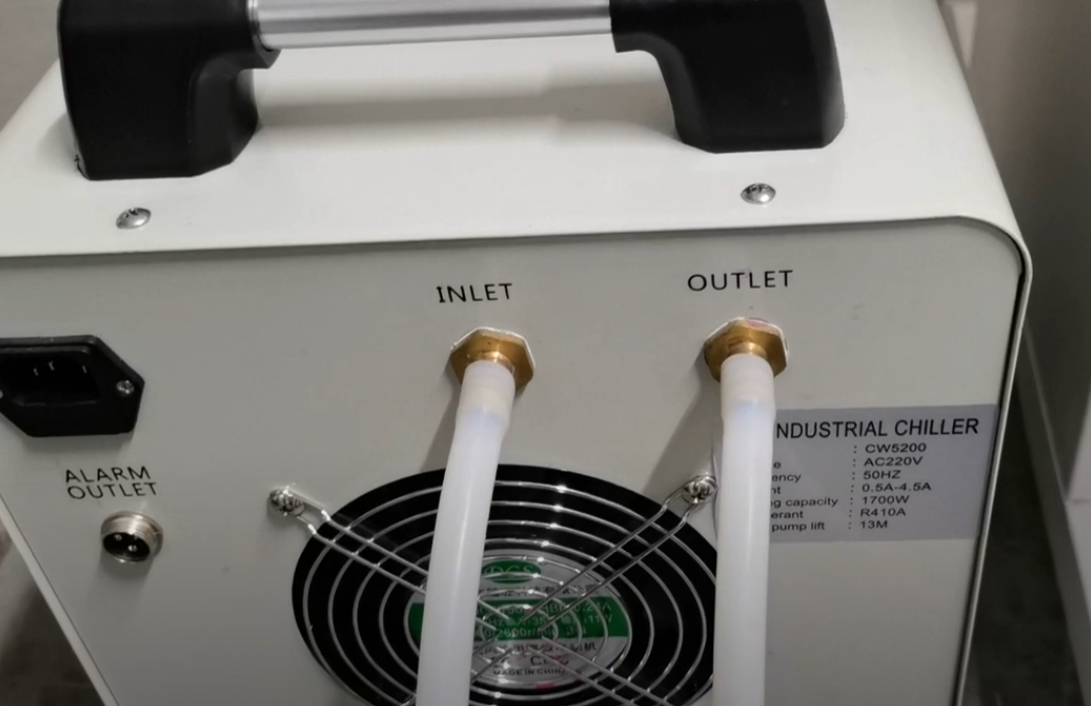
the inlet and outlet pipes of the chiller
(Source: Internet. It can be deleted if there is any infringement.)
2.Heat Absorption
As the coolant passes through the laser, the heat generated by the laser during operation is transferred to the coolant via internal components and carried away with the liquid.
3.Heat Dissipation
The heated coolant returns to the interior of the chiller, and the heat is dissipated into the air or a separate water circuit by the compressor in the radiator (depending on the chiller unit's design). After the coolant temperature drops, it flows back to the laser system again, forming a continuous circulating cooling cycle.
Through this circulating cooling system, the chiller can effectively control the laser's temperature, ensuring it operates in a stable temperature environment and thus avoiding various problems caused by high temperatures.
Ⅲ. The Role of Chillers in CO₂ Laser Equipment
The electro-optical conversion efficiency of CO₂ RF lasers is only 10% to 20%, meaning more than 80% of the input electrical energy is converted into waste heat. If this heat cannot be dissipated in a timely manner, it will trigger the following chain reaction:
| Consequence of Temperature Rise | Mechanism | Impact |
|---|---|---|
| Power Attenuation | Decreased Gas Excitation Efficiency | Reduced Processing Speed, Poor Cut Quality |
| Beam Deterioration | Thermal Lens Effect, Resonator Deformation | Divergent Focused Spot, Reduced Accuracy |
| Shortened Service Life | Electrode Oxidation, Overheated RF Board | Premature Laser Scrap, High Maintenance Costs |
The optimal operating temperature of CO₂ RF lasers is 24±1℃, and performance attenuation begins when the temperature exceeds 30℃.
Whether it's a CO₂ laser cutting machine or a CO₂ marking machine, a stable temperature control system is crucial for maintaining the equipment's efficient operation. Industrial chillers, in turn, are important auxiliary devices that ensure the laser's long service life and stable output. Below are the four core functions of chillers:
- Precisely Regulate Cooling Water Temperature to Ensure Optimal Operating Conditions: Cooling a CO₂ laser with a simple water pump often fails to stably control the cooling water temperature, making it difficult to meet the requirements of high-precision processing. In contrast, industrial chillers continuously cool the laser generator through water circulation and can maintain the temperature within ±0.5℃, thereby effectively extending the service life of the laser equipment.
- Stabilize Laser Output Power: Temperature fluctuations directly affect the laser's power stability. Laser water chillers maintain stable power output of CO₂ laser equipment during processing through precise temperature control.
- Extend Equipment Service Life: High temperature is one of the main causes of laser damage (such as electrode aging, resonant cavity deformation, and radio frequency power supply failure). Laser water chillers effectively dissipate heat, reduce thermal stress, protect the optical system, and extend the overall service life of the equipment. This not only significantly reduces expensive maintenance costs and downtime but also directly improves the equipment's service life and return on investment (ROI).
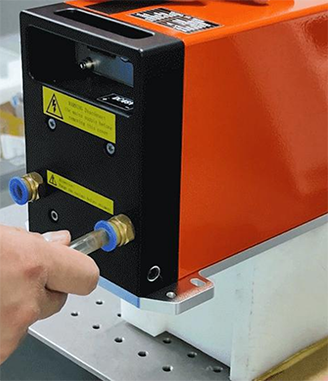
Cooling pipe to the laser
4. Ensure Processing Precision: Excessively high laser temperature leads to degraded beam quality (such as increased divergence angle and spot distortion) and greater laser power fluctuations, which directly impair the laser's processing performance. By maintaining a stable operating temperature for the CO₂ laser, the laser water chiller enables the optical system to continuously output high-quality laser beams. This is of great significance for applications requiring extremely high precision, such as thin-film cutting and micro-hole drilling.
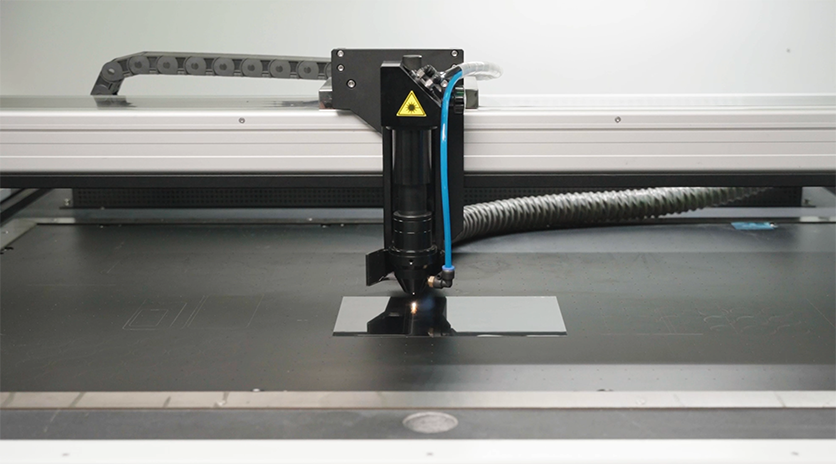
CO₂ laser cutting
Ⅳ. How to Choose the Right Laser Water Chiller
1. Cooling Capacity
Cooling capacity is the core indicator of a laser water chiller, determining whether it can effectively dissipate the heat generated by the laser during operation.
Research shows that the electro-optical conversion efficiency of common CO₂ radio frequency (RF) lasers on the market is approximately 10% to 20%. The lower the laser’s electro-optical conversion efficiency, the more heat it generates, and the higher the requirements for the cooling system.
The laser water chiller’s cooling capacity should be comprehensively calculated based on the following laser-related factors:
A. Laser rated power
B. Actual operating time (load condition)
C. Heat load (heat generation)
Laser heat generation calculation formulas:
Laser output power: P (laser) = U (voltage) × I (current)
Laser heat generation (theoretical value): P (heat) = P (laser) × (1 - η) / η;
where η is the laser’s electro-optical conversion efficiency.
In the theoretical calculation of CO₂ laser electro-optical conversion efficiency, the heat generation is basically close to the input power. This is because most CO₂ lasers have low electro-optical conversion efficiency, and most of the electrical energy is not converted into laser output. When calculating the chiller’s cooling capacity, to ensure stable equipment operation, a certain margin is usually reserved for the cooling system. Even when considering the electro-optical conversion efficiency, its actual impact on the required cooling capacity is minimal. Therefore, when calculating the cooling capacity required for the laser, the heat generation can be approximately considered equal to the input power, i.e.: P (heat) ≈ P (laser)
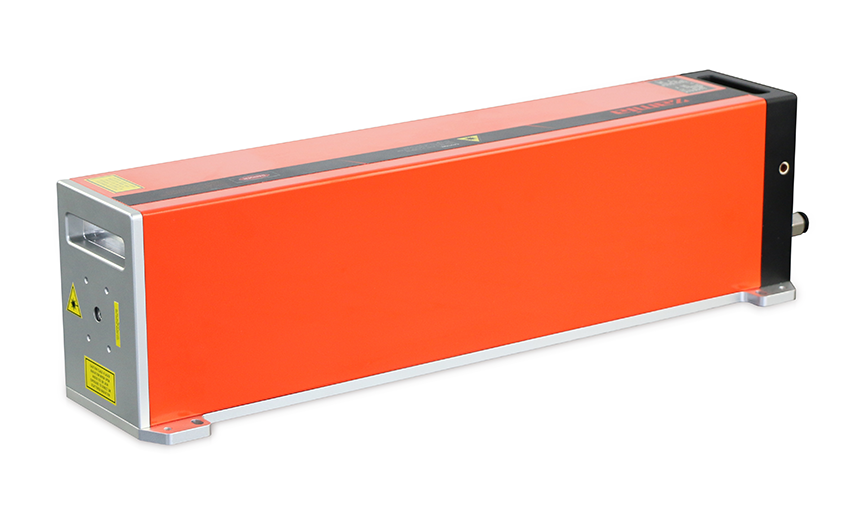
Example: Heat Generation Calculation for ZAMIA F10 CO₂ RF Laser
The electrical input parameters of ZAMIA F10 are: 48VDC ±0.5V / 40A (maximum current)
① Laser input power:P (laser) = 48VDC × 40A = 1920W
② Laser heat generation:P (heat) ≈ P (laser) ≈ 1920W
In other words, when the laser operates at full load, approximately 1920W of residual energy is generated in the form of heat. This heat must be promptly dissipated by the chiller to ensure the laser maintains an optimal operating temperature range, avoiding the risk of power attenuation or damage.
When selecting a laser water chiller, comprehensive evaluation should also consider factors such as the actual operating ambient temperature and water pump power consumption. To ensure stable cooling capacity under all operating conditions, it is recommended to choose a laser water chiller with a cooling capacity approximately twice or more the laser’s heat dissipation requirement.
Choices Recommendation: It is generally advisable to select a model with a cooling capacity slightly higher than the actual heat dissipation demand. This ensures stable temperature reduction even during high-load operation. For example, for the ZAMIA F10 CO₂ laser, if the cooling requirement is 2kW, a laser water chiller with a cooling capacity of 2kW or more should be selected.
2. Pump Head or Outlet Water Pressure
The pump head or outlet water pressure determines the ability of the cooling fluid to reach the laser and circulate smoothly. If the water path is long, it is necessary to increase the head to ensure that the cooling fluid can reach the laser and return to the chiller smoothly.
Selection Recommendations (Based on Water Path Complexity):
A. Standard Installation (Distance < 3 meters, simple pipeline): Follow the head recommended by the equipment manufacturer.
B. Medium Distance (3 ~ 8 meters, with pipe elbows): Increase the head by 10% ~ 20% as a margin.
C. Long Distance (> 8 meters, with pipe elbows or large height differences): Increase the head by 20% ~ 30% as a margin; an external circulation pump can be selected if necessary.
| Pipeline Condition | Recommended Head Margin | Minimum Flow Requirement |
|---|---|---|
| Short Distance (< 3m, no elbows) | +10% | Meet the manufacturer's minimum value |
| Medium Distance (3 ~ 8m, with elbows) | +20% | Select a model with 10% higher flow rate |
| Long Distance (> 8m, with height difference) | +30% | Consider an external booster pump |
Note: Some lasers have strict requirements on the minimum flow rate; if the flow rate is lower than this value, the laser will alarm and shut down.
3. Circulation Flow Rate (L/min)
Suggestions: It must meet the minimum flow rate standard specified by the laser manufacturer; otherwise, the laser cannot be guaranteed to obtain sufficient cooling capacity.
4. Temperature Control Accuracy
Selection Recommendations:
5. Cooling Liquid
6. Reliability and Maintenance Convenience
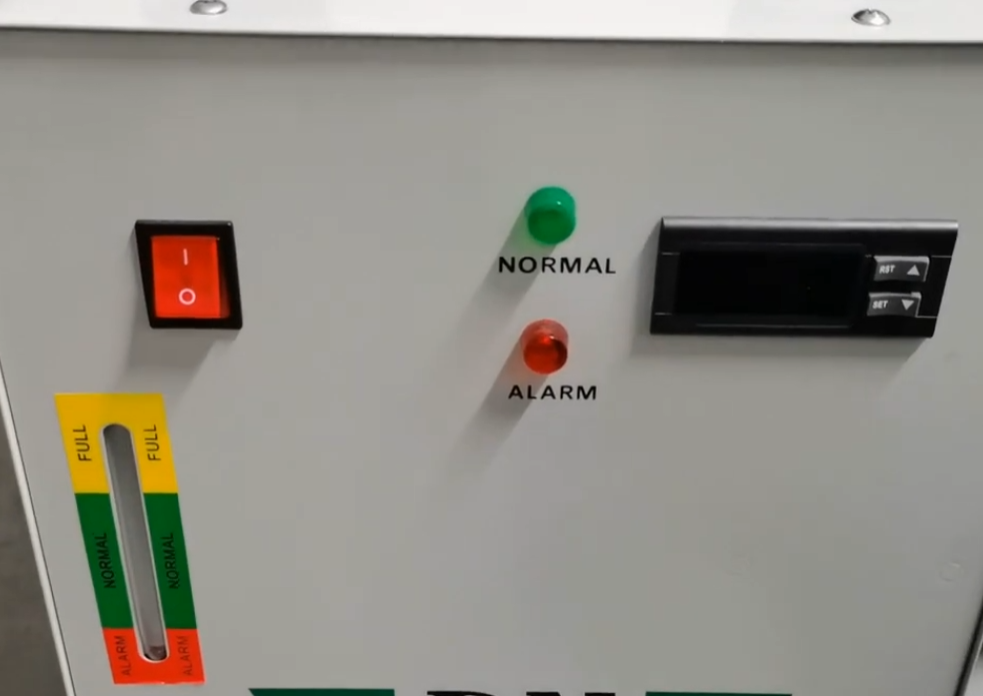
Chiller Low Water Level Alarm Indicator Light
(Source: Internet. It can be deleted if there is any infringement.)
7.Quick Matching Guide on Chiller
Ⅴ. How to Do the Regular Maintenance for Chiller?
Regular maintenance of the chiller is as important as that of the laser engraving machine. Good maintenance habits can not only maintain refrigeration efficiency but also extend equipment service life and reduce failures. Below are the key maintenance points:
Ⅵ. Conclusion
The water chiller is vital to the stable operation of CO₂ laser equipment. By maintaining a constant operating temperature for the laser, it not only ensures the stability of laser output but also significantly extends the equipment's service life and effectively reduces the risk of malfunctions caused by overheating.