

Importance of Glass in Industry
Glass, as a versatile and indispensable material, plays a pivotal role across numerous industrial sectors. It is widely used in windows and curtain walls for construction, screens and displays for electronics, windshields and mirrors for automotive applications, and pharmaceutical bottles and medical equipment. Its unique properties—transparency, chemical resistance, and thermal stability—make it the material of choice for diverse applications.

Source: Internet, infringement can be deleted
Glass Separation Methods
Customized separation and shaping of glass are critical for meeting specific application requirements. Glass separation refers to the process of cutting, snapping, or fracturing bulk glass into desired shapes or sizes. As industrial demands evolve, glass separation techniques have progressed from traditional manual methods to high-precision automated processes. The choice of technology directly impacts product performance and production costs. This article categorizes four mainstream glass separation processes based on stress mechanisms, outlining their principles, characteristics, and applications:
-Cutting glass by hand: Flexible and low-cost, but limited to regular shapes and moderate thicknesses. Poor precision and consistency make it unsuitable for industrial-scale needs.
-Mechanical Cutting: Uses manual or semi-automated equipment to apply stress. Suitable for bulk processing but yields average edge quality with micro-crack risks.
-Waterjet Cutting: Employs high-pressure water mixed with abrasives. Ideal for heat-sensitive or irregularly shaped glass, yet inefficient, costly, and environmentally demanding. Best for small-batch, high-value applications
-Laser Cutting: Non-contact, high-precision, and automated. Uses laser energy to induce crack propagation, enabling dust-free, high-accuracy processing—the future of the field. CO₂ lasers are among the most commonly used lasers for glass processing. Currently, the core components of CO₂ lasers are CO₂ laser tube and RF CO₂ laser. You can check the difference between RF laser VS CO2 laser tube.
I. Cutting glass by hands: Experience-Driven Mechanical Stress Separation
Hand cutting is a basic glass processing method involving two steps:
1. Scoring: An operator uses a handheld tool (e.g., diamond-tipped or carbide glass cutters) to etch a guide line along a straightedge in one steady, continuous motion.
2. Snapping: Bending pressure is applied along the score line to fracture the glass along the intended path.
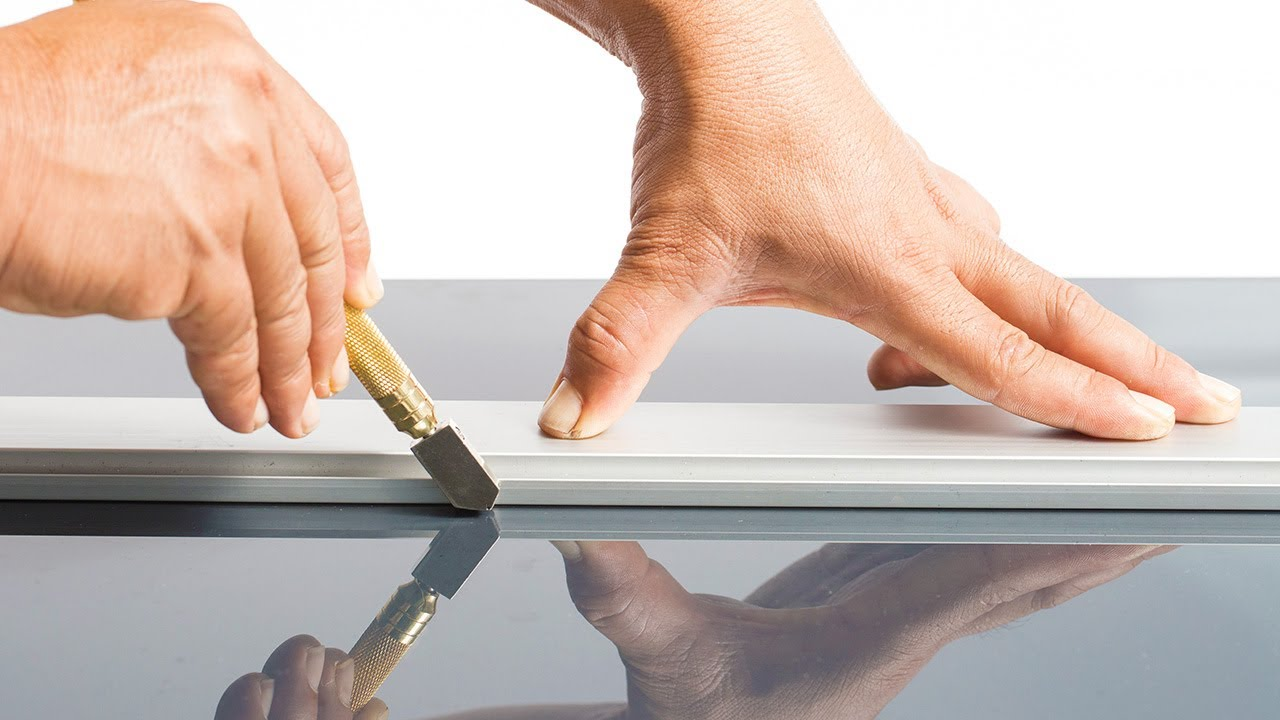
Manually engraved guide lines (Source: Internet, infringement may be deleted)
This method is suitable for flat glass up to 3 mm thick and demands high operator skill, care, and precision.
Limitations:
1. Efficiency Bottleneck: Labor-intensive and time-consuming; daily output per worker is <20% of mechanical methods.
2. Quality Flaws: High edge chipping rates (15%–20%), necessitating secondary polishing and increasing costs.
3. Application Constraints: Unsuitable for glass >5mm thick and incompatible with automated production lines.
4. Its core advantage is low equipment cost, making it ideal for small studios or custom low-volume scenarios.
II. Mechanical Cutting Glass: Automated Contact Stress Separation
Mechanical stress cutting involves scoring glass with carbide or diamond cutter tools, then applying external pressure to induce crack propagation. The process has two phases:
1. Scoring Phase: A diamond tip or carbide wheel creates an initial crack on the glass surface.
2. Separation Phase: Manual or semi-automated devices (e.g., pneumatic breaking tables, mechanical pliers) apply force to fracture the glass along the scored line.
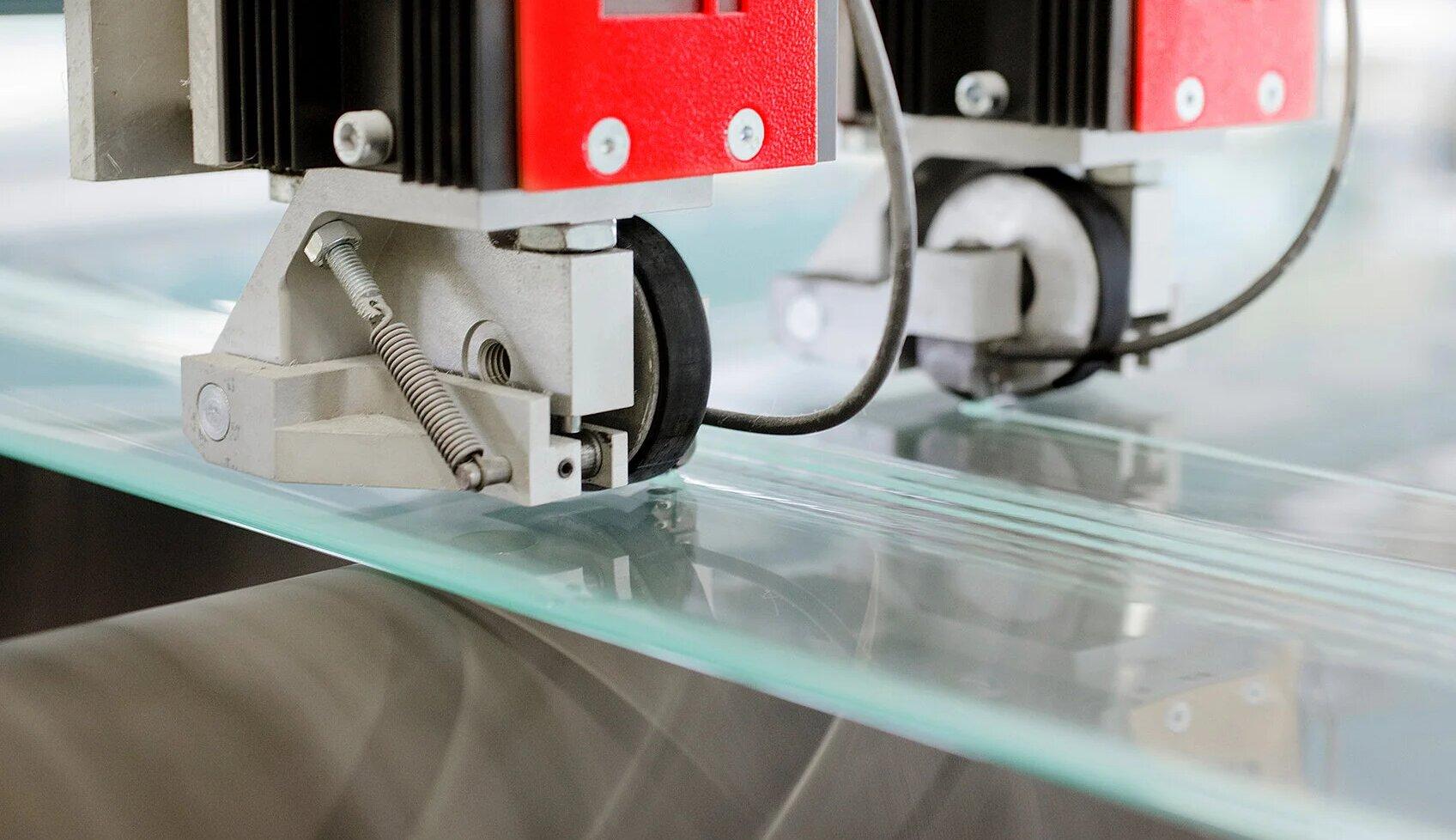
Cutting machine for glass cutting (Source: Internet, infringement may be deleted)
This method excels in batch production of architectural flat glass (6–12mm thick), cutting five times faster than hand cutting glass.
Inherent Limitations:
1. Crack Control Challenges: Initial cracks from tools (e.g., diamond wheels) may deviate, causing edge chips, breaks, or micro-cracks.
2. Strength Reduction: Microscopic defects reduce edge flexural strength by 30%–40%, requiring secondary polishing/grinding.
3. Tool Wear Costs: Diamond tools degrade; wheels need replacement every ~500 linear meters, increasing production costs.
4. Low Efficiency for Complex Shapes: Stress control difficulties, manual intervention, and equipment limitations extend processing time by 2–3× and reduce yield by >15%.
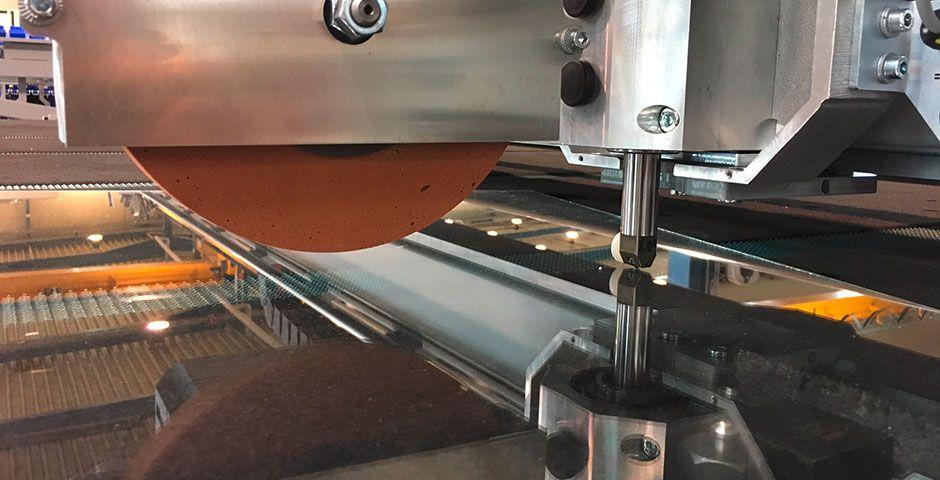
Mechanical cutting wheel (Source: Internet, infringement may be deleted)
III. Waterjet Cutting of Glass: Cold Abrasive Jet Machining
Waterjet cutting uses ultra-high-pressure water (pure waterjet) or water mixed with abrasives (abrasive waterjet) ejected through a fine nozzle to erode and cut glass. As a "cold cutting" solution, it handles tempered, laminated, and complex-shaped glass.
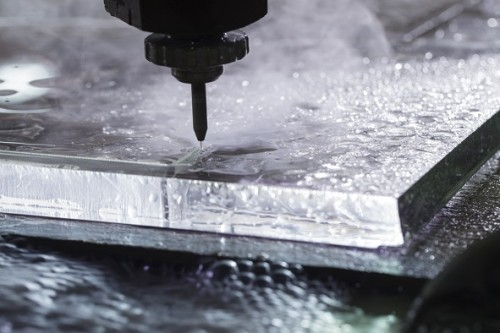
Close-up of water jet cutting (Source: Internet, may be deleted if infringement occurs)
Drawbacks:
1. High Operating Costs: Significant power consumption (30–50 kWh/hour) and consumable expenses (water, abrasives, parts).
2. Low Speed: Cuts 5mm glass at 0.3–0.5 m/min, far slower than laser-induced thermal stress separation(~5 m/min). Frequent maintenance (nozzle replacement/calibration every 50–100 hours) reduces efficiency.
3. Frosted Edges: Abrasive waterjet leaves a matte finish with roughness up to Ra 3.2–6.3 μm. Additional polishing is needed for optical-grade surfaces.
4. Environmental Impact: Generates wastewater and dust.
These constraints limit its use in mass production; it remains best for small-batch, high-value specialty glass.
IV. Laser Cutting Glass: The Photothermal Stress Precision Revolution
With rising demands for crack-free, high-edge-quality glass products, traditional mechanical methods struggle to deliver sufficient yield despite acceptable efficiency. Laser cutting simplifies processes, boosts yield, and enhances edge quality, making it ideal for precision items like optical filters.
Two dominant laser techniques exist for glass precision cutting:
1. Traditional CO₂ Laser Thermal Cleaving
Mechanism:
1. Localized Heating: A high-energy CO₂ laser beam rapidly heats a glass surface area above its softening point.
2. Stress Generation: Thermal expansion creates significant stress in the isotropic brittle glass.
3. Crack Propagation: When stress exceeds the glass’s strength, initial cracks form and extend along a controlled path.
Limitations:
Avoids contact damage but creates a 100–200 μm Heat Affected Zone (HAZ), causing localized softening, remelting, micro-cracks, and edge strength loss. This poses yield challenges for ultra-thin glass (<0.3mm) and specialty compositions.
2. Picosecond Ultrafast Laser Scribing + CO₂ Laser Scanning for Separation
This hybrid method combines cold processing and thermal stress control for breakthrough results.
Phase 1: Picosecond Laser Non-thermal Modification
Ultrafast picosecond pulses (pulse width <10 ps, wavelength 1064/532 nm) create subsurface modification layers (depth: 20–30 μm) via multiphoton nonlinear absorption. Energy deposition occurs faster than lattice heat diffusion, limiting HAZ to micron/submicron levels for near-zero thermal damage.
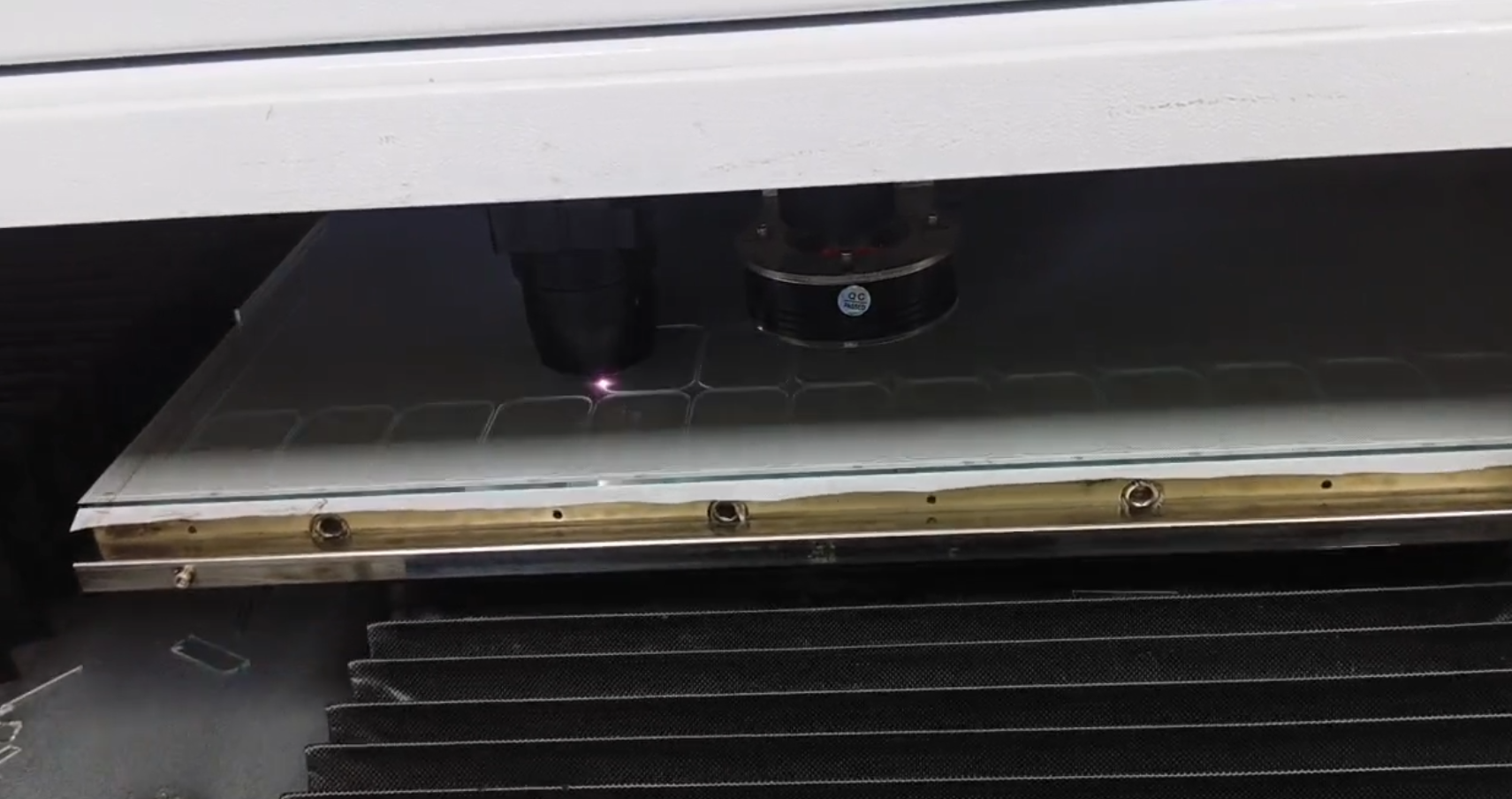
Picosecond ultrafast laser cutting
Phase 2: CO₂ Laser Thermal Stress for Separation
A low power RF CO₂ laser heats the picosecond-modified track. Rapid cooling generates directional thermal stress for precise separation.
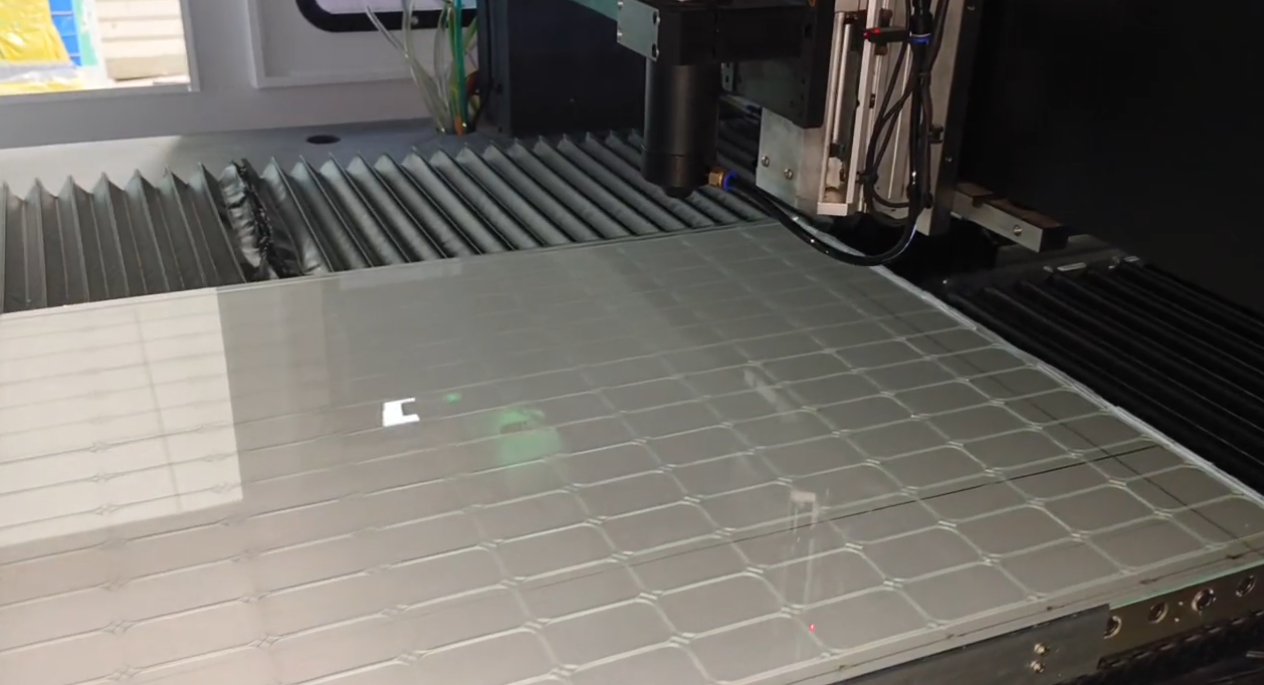
CO₂ laser thermal stress induced separation
Advantages:
1. High speed & Automation: Integrates picosecond laser, CO₂ lasers, high-speed platforms, and vision systems for closed-loop unmanned production. Cuts 8× faster than CNC mechanical methods and 40× faster than waterjet.
2. High Precision: Adjustable laser parameters control crack formation/extension, enabling complex patterns, 3D structures, micro-holes (min. Ø 0.8mm), and ultra-thin glass (0.1–25mm). Compatible with glass, sapphire, ceramics, and other hard brittle materials.
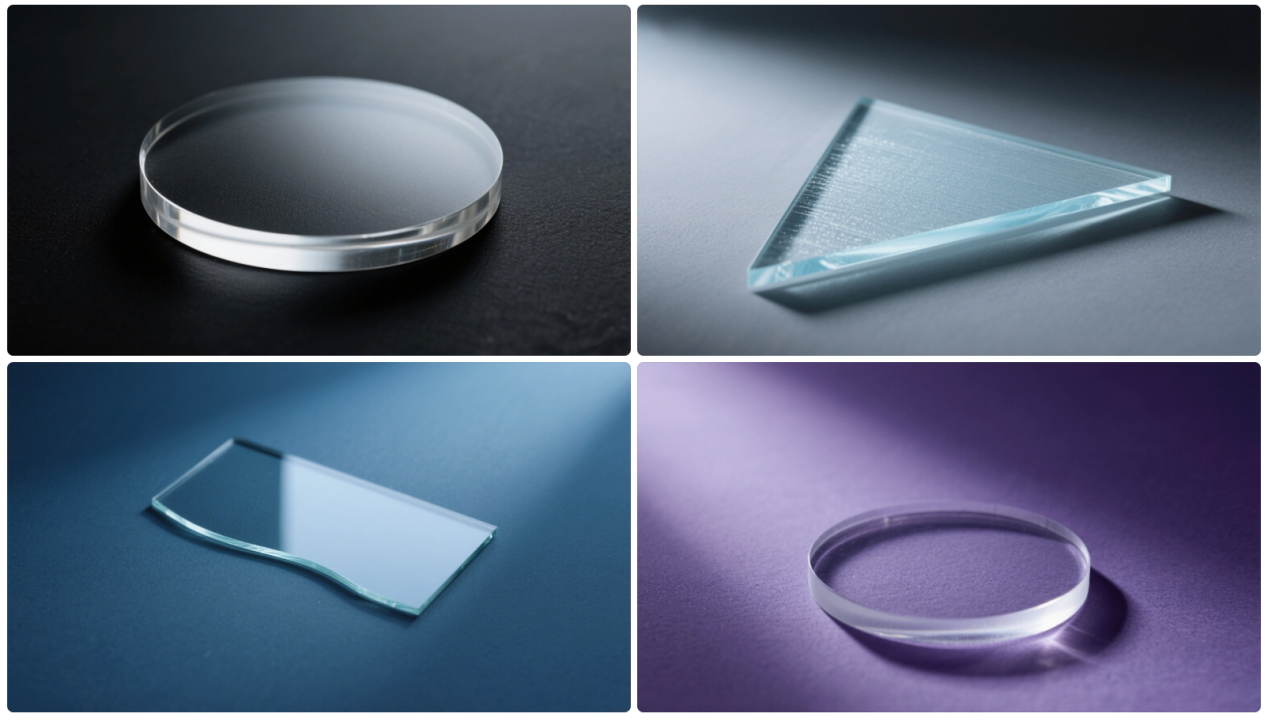
Inducing glass separation effects using RF CO₂ lasers
3. Superior Edge Quality: Non-contact process eliminates tool wear, ensures uniform thickness, and achieves micron-level edge flatness without polishing.
4. Optimized HAZ Control: Total HAZ is significantly reduced vs. pure CO₂ methods (minimal in Phase 1, controlled in Phase 2).
5. Environmentally friendly processing: No mechanical stress, debris, micro-cracks, or dust—eliminating filtration needs for green manufacturing.
This hybrid technology solves the efficiency, yield, edge quality trilemma in brittle material processing. Its core value lies in trading relative higher initial investment for extreme precision, damage-free edges, and full automation—ideal for mass production of high-end components.
Ⅴ . Comparison of Glass Cutting Methods
|
Method |
Precision |
Speed |
Edge Quality |
Automation |
Cost Level |
|
Manual Cutting |
Low |
Low |
Poor |
Very limited |
Low |
|
Mechanical Cutting |
Medium |
Medium |
Moderate |
Partial |
Medium |
|
Waterjet Cutting |
High |
Low |
Moderate |
Partial |
High |
|
Laser Cutting |
High |
High |
Excellent |
High |
High |
Ⅵ. Conclusion
As a cornerstone of modern industry, glass’s precision machining capabilities profoundly impact innovation in construction, electronics, healthcare, and beyond.
Glass cutting technologies have evolved from cutting glass by hands and mechanical stress methods to today’s pinnacle: picosecond ultrafast laser scribing + CO₂ laser scanning for separation. Driven by extreme demands—sub-pixel precision for OLED displays, microchannel integrity for microfluidic chips, and curvature consistency for photovoltaic glass—this technology achieves nanometer-level accuracy. By mastering photothermal stress modulation, picosecond ultrafast laser scribing + CO₂ laser scanning for separation delivers revolutionary gains in precision, efficiency, quality, and sustainability, representing the cutting edge of glass separation technology.