

Introduction
Weeds in farmland have long severely restricted crop yield and quality. They compete with crops for nutrients, water and sunlight, while also providing breeding grounds for pests. Currently, global agriculture still mainly relies on traditional weeding methods such as manual weeding, mechanical weeding and chemical weeding, all of which face obvious bottlenecks in terms of efficiency, cost and environmental friendliness.
Manual weeding: It is labor-intensive and inefficient. Especially during the optimal weeding period for some crops (usually only 7–10 days), it is difficult to achieve large-scale and efficient coverage.
Mechanical weeding: Although it has certain efficiency, it easily damages crop roots and disturbs soil structure. It also has limited adaptability to complex terrain and densely planted crops.
Chemical weeding: It causes serious pollution, and its residue problem has posed a long-term hidden danger to the ecological environment and food safety.
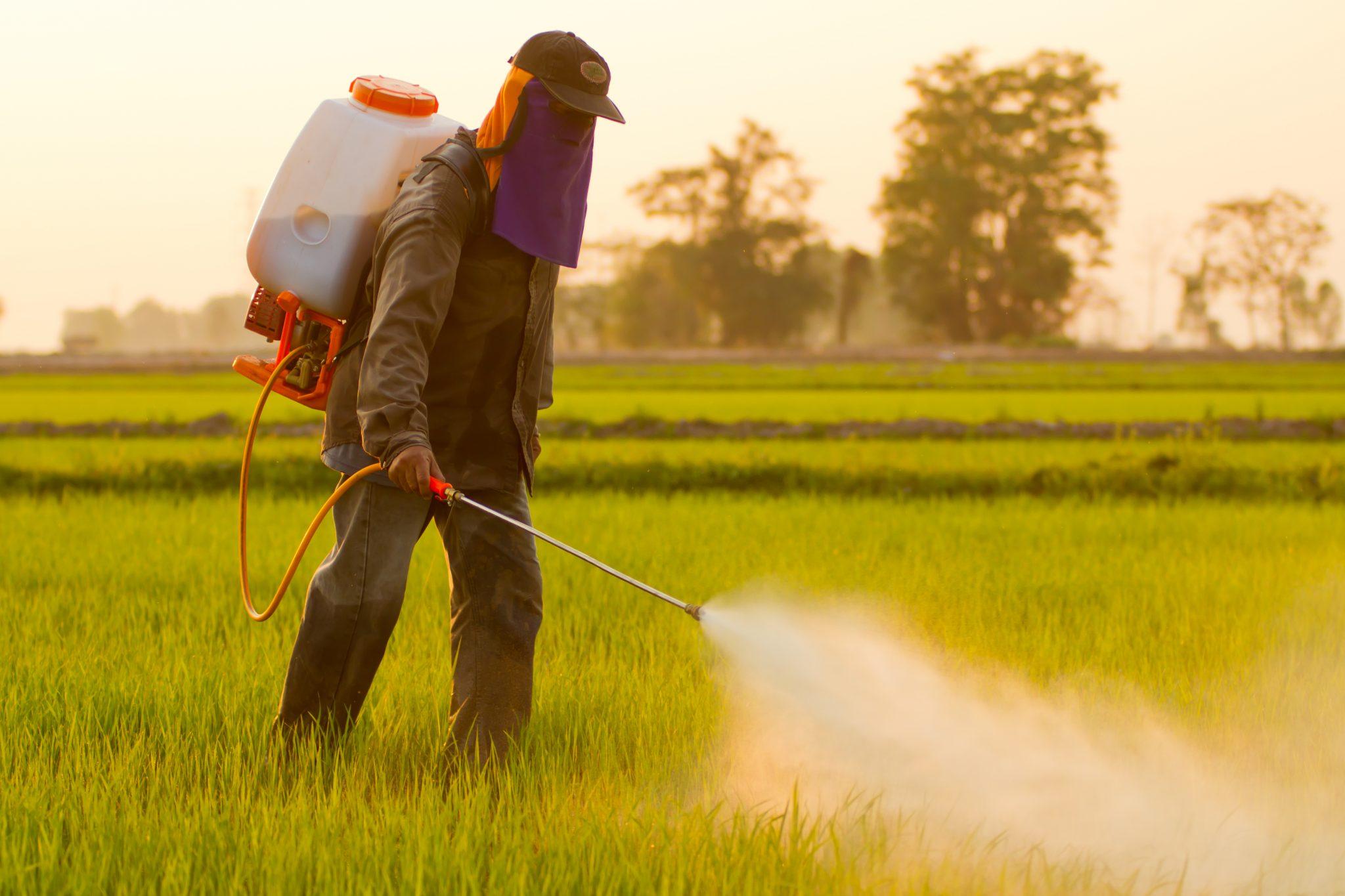
▲Spray chemical weed killer (Source: Internet, infringement can be deleted)
Against this backdrop, laser weeding has emerged as an new physical weeding method. At the heart of the system is the CO2 laser tube, a critical component whose performance directly affects both weeding efficiency and overall system stability. Thanks to its non-contact operation, zero chemical residue and high intelligence, laser weeding has garnered growing attention within the agricultural sector. It has become an important technical direction for the intelligent and green transformation of agriculture, as well as a key breakthrough in the green transformation of modern agriculture.
Technical Principles of Laser Weeding
Laser weeding is a non-contact energy treatment technology that uses high-energy laser beams to instantaneously heat specific parts of weeds, destroying their cellular structure and physiological functions to achieve targeted removal. Its working process covers the following core links:
1. Weed identification and positioning
The system uses high-resolution cameras combined with machine vision and AI algorithms to identify and distinguish between field crops and weeds in real time, and accurately lock the position of target weeds.
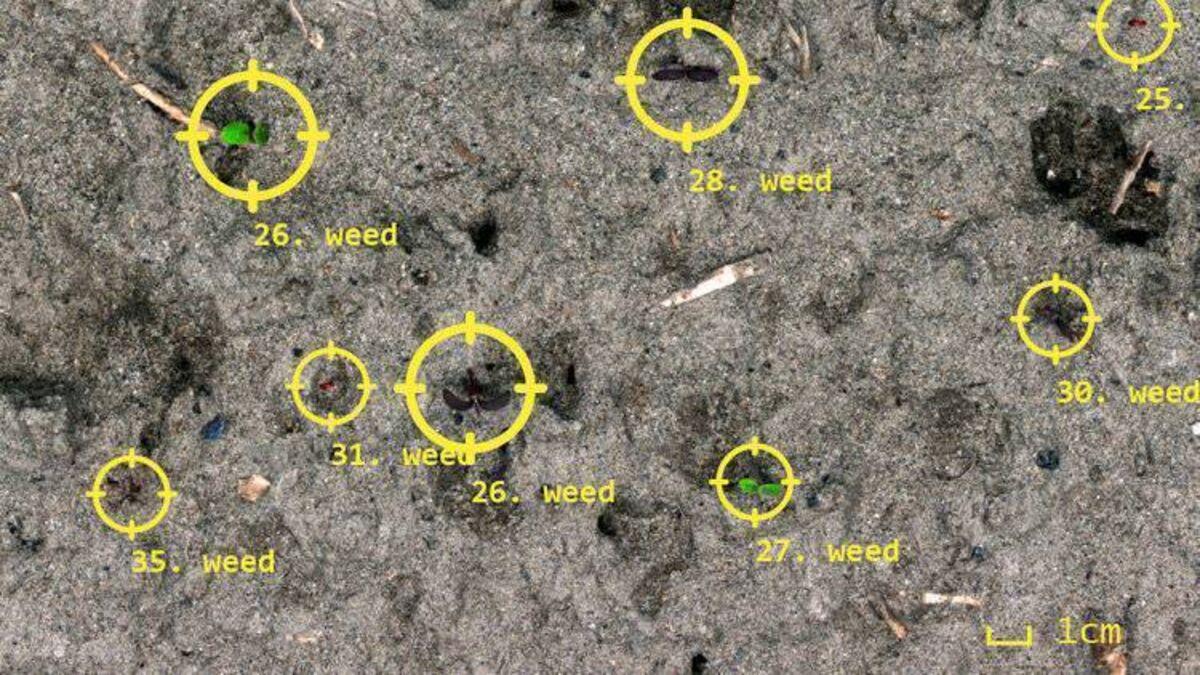
▲The process of weed identification by laser machine (Source: Internet, infringement can be deleted)
2. Laser energy absorption
When laser irradiates weed tissues, components such as water and cellulose in plant cells strongly absorb specific wavelengths, which determines the utilization efficiency of laser energy.

▲Laser machine weed removal process (Source: Internet, infringement can be deleted)
3. Thermal effect conversion
The absorbed light energy is rapidly converted into heat energy, causing the temperature inside weed cells to rise sharply in a very short time, triggering water vaporization, protein denaturation and cellular structure destruction.
4. Physiological function destruction
After the cell tissue is damaged, the weed’s meristematic tissue is destroyed, and they eventually lose their regenerative capacity, achieving effective weed control.
Mechanism of CO2 Lasers in Laser Weeding
In the design and optimization of laser weeding systems, the selection of laser sources is the core decision that determines the efficiency, economy and reliability of the entire system. Currently, the main laser sources for agricultural applications on the market include CO2 lasers, diode lasers and fiber lasers (2 μm wavelength). After comprehensively evaluating their technical characteristics and the stringent requirements of agricultural scenarios, CO2 lasers are regarded as the advantageous laser source for large-scale and efficient agricultural weeding applications at present. This choice is based on three key factors:
1.Optical Characteristics: Optimal Spectral Matching with Plant Tissue
CO2 laser tubes for agricultural applications operate at a wavelength of 10.6 μm in the far-infrared range. This wavelength aligns closely with the absorption peaks of water, cellulose, lignin, and other structural components in plant tissues.
This excellent spectral matching enables laser energy to be quickly absorbed by weed tissues and efficiently converted into heat energy. Under the premise of achieving the same weeding effect, CO2 lasers require lower energy, and their energy coupling efficiency is significantly better than that of visible or near-infrared band lasers, which improves the overall energy efficiency of the system from the source.
2.Energy utilization and operation economy: Fast and concentrated thermal effect
CO2 lasers can provide stable energy output in an extremely short time, and usually only take a few milliseconds to cause irreversible damage to weed cell structures. This fast and concentrated thermal effect can effectively limit the diffusion of heat to surrounding crops and soil, reducing energy loss in non-target areas. In large-area operations where a large number of weed plants need to be continuously treated, the efficient thermal coupling characteristics help reduce the power consumption per unit operation area, significantly improving the system’s long-term operational cost-effectiveness.
3.Engineering maturity and application reliability: Supporting the large-scale deployment of agricultural equipment
As one of the most established industrial laser types, CO2 lasers offer proven reliability in terms of stability, service life, and maintenance costs, having been deployed in cutting, marking, and medical applications for decades.
The agricultural operation environments are complex and changeable, and equipment needs to withstand long-term factors such as vibration, dust, temperature and humidity changes. Adopting CO2 laser sources with mature technology and high reliability helps reduce the failure rate and maintenance frequency during field operations, and provides stable support for the large-scale promotion and commercial application of laser weeding equipment.
Horizontal Comparison and Comprehensive Trade-off
Although diode lasers have certain advantages in terms of volume and system integration, in the agricultural weeding application scenario that emphasizes energy absorption efficiency, continuous operation capability and field environment adaptability, CO2 lasers achieve a more balanced technical trade-off among efficiency, cost and reliability.
At this stage, CO2 laser technology is still the preferred laser source solution to promote the large-scale implementation of laser weeding and empower precision agriculture and green agriculture development.
Comprehensive Advantages of Laser Weeding Over Traditional Methods
Compared with traditional weeding technologies, laser weeding has significant advantages, mainly reflected in the following aspects:
1. Ensuring food safety
As a purely physical weeding method, CO2 laser technology completely eliminates the introduction of chemical herbicides from the source of production, and fully avoids the potential pollution of pesticide residues to crops, soil and water sources. This provides a fundamental technical path to solve the food safety and ecological environment problems caused by the global annual use of about 4 million tons of chemical herbicides, and provides a reliable guarantee for the production of truly clean and traceable agricultural products.
2. Achieving high efficiency and economy
The laser weeding process is highly automated and mechanized. The system is only driven by electric energy, and its operation capacity can reach several times that of traditional methods, significantly optimizing the long-term operating cost and benefit structure of large-scale agriculture.
Taking the all-day intelligent laser weeding robot as an example, its high-end configuration can integrate up to 32 laser emission units, which can process about 320,000 weeds per hour. Its operation efficiency is 4–8 times that of traditional manual or chemical weeding methods, fully reflecting the efficiency advantage of laser weeding in large-scale agricultural applications.
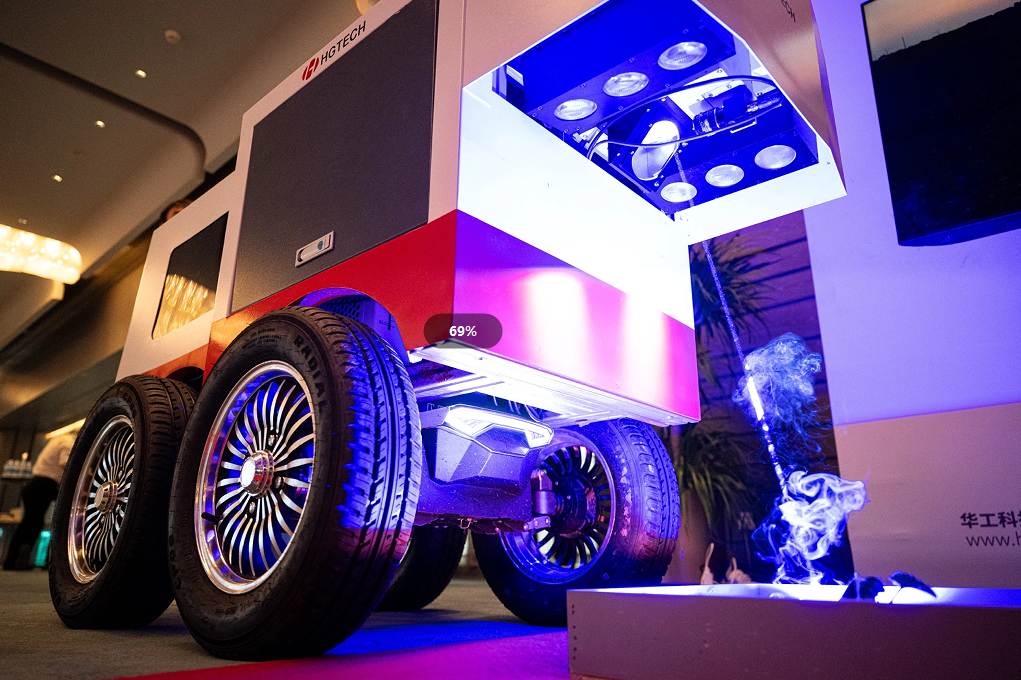
▲all-day intelligent laser weeding robot (Source: Internet, infringement can be deleted)
3. Intelligent and precise operation
Combined with AI visual recognition and precise control algorithms, it can accurately distinguish between crops and weeds. After locking the target, the laser beam is precisely guided to the key growth points of weeds for instantaneous action, effectively avoiding accidental injury to crops and improving weeding consistency and operation quality. For example, the weeding robot from the US company Carbon Robotics is equipped with 12 high-resolution cameras and a real-time AI model, ensuring that only target weeds are treated, significantly improving the timeliness and quality of weeding.
4. Protecting soil ecology
The non-contact operation method completely avoids mechanical damage and compaction to the soil structure. Its local and instantaneous thermal effect range is extremely small, and it will not disturb the beneficial microbial communities in the soil. By precisely removing weeds, it effectively reduces the competition of crops for water and nutrients. In the long run, it helps to build a healthier and more dynamic rhizosphere growth environment for crops, which is the most fundamental maintenance and investment in land productivity.
In summary, the real advantage of laser weeding technology lies in its systematicity—it integrates the core demands of modern agriculture such as food safety, economic benefits, operation accuracy and ecological sustainability into an efficient and intelligent technical solution, representing an important direction for the development of agricultural productivity.
Application Practice and Scenario Expansion
Laser weeding technology is moving from the experimental stage to extensive commercial application. Through deep integration with autonomous driving agricultural machinery platforms, it has formed a flexible and efficient intelligent operation solution. Its application potential is being demonstrated in multiple core agricultural scenarios around the world:
-Organic agriculture and ecological farms
The characteristic of completely no chemical agents makes this technology an ideal choice for organic certified farms, helping producers achieve effective weed control while meeting organic standards.
-Tea gardens and orchards
For such high-value and root-sensitive crops, laser weeding machines can precisely act on inter-row weeds, completely avoiding damage to fruit tree trunks and shallow root systems caused by mechanical hoes or chemical agents, ensuring the health of fruit trees and the quality of fruits.
-Greenhouses and protected agriculture
Inside facilities with controllable environments, limited space but extremely high labor costs, lightweight and modular automatic laser weeding units can achieve high-frequency and unmanned fine management, greatly reducing production and operation costs and improving economic benefits.
-Field grain crops
Combined with unmanned tractors, the laser weeding system can complete large-scale operations of thousands of acres. Its non-contact feature is particularly suitable for the fragile early growth stage of crops, effectively preventing weeds while retaining the most suitable soil environment for crop root growth.
The LaserWeeder laser weeding robot launched by Carbon Robotics in the United States is a typical case designed for large-scale row crops. Relying on satellite navigation, multi-camera vision systems and multiple sets of CO2 lasers, the robot realizes all-weather and autonomous operation. It can operate 6–8 hectares per day, accurately remove inter-row weeds without damaging crops, and successfully solve multiple pain points such as labor shortage, chemical weeding resistance and soil compaction in large-scale farms, providing an important "new carrier for weed control" for smart agriculture.
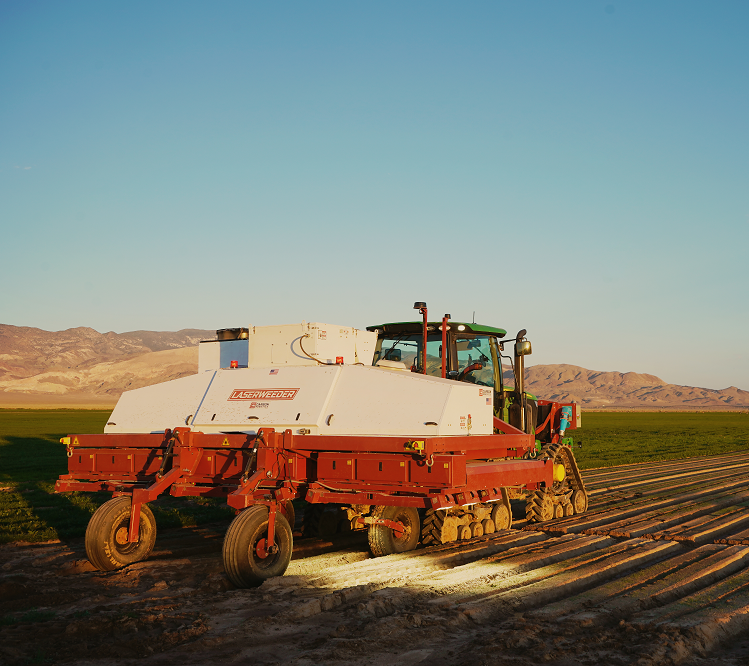
▲laser weeding robot from Carbon Robotics operates on large-scale farms (Source: Internet, infringement can be deleted)
Future Development Trends
Currently, laser weeding is in the stage of accelerated industrialization. With the decline in laser costs, the maturity of artificial intelligence algorithms and the improvement of energy management technology, laser weeding equipment is gradually developing towards high efficiency, modularization and intelligence. Carbon Robotics has taken the lead in promoting the commercial operation of LaserWeeder. In 2025, domestic enterprises such as Huagong Technology also successively launched domestic laser weeding prototypes and announced that their all-weather laser weeding robots have entered large-scale field verification, and are expected to achieve mass production in 2026.
At the policy level, China also encourages the development of green agricultural technologies. With the advancement of the "dual carbon" goals and the demand for agricultural modernization, environmental protection technologies such as laser weeding have received more attention and support. Market research predicts that the Chinese and even global laser weeding markets will usher in explosive growth in the next few years, with technological innovation and large-scale application becoming the main trends.
Conclusion
In summary, CO2 laser weeding technology, with its unique wavelength advantages, efficient energy utilization and mature engineering foundation, provides a brand-new solution for agricultural weeding that balances efficiency, environmental protection and sustainability. Against the background of the continuous advancement of green agriculture and smart agriculture, laser weeding is expected to become an important part of the future agricultural equipment system.
Looking ahead, with the reduction of laser costs and the maturity of artificial intelligence and autonomous driving technologies, CO2 laser weeding is expected to become an important part of agricultural green production, playing a key role in building an energy-saving, environmentally friendly and eco-friendly modern agricultural ecosystem.